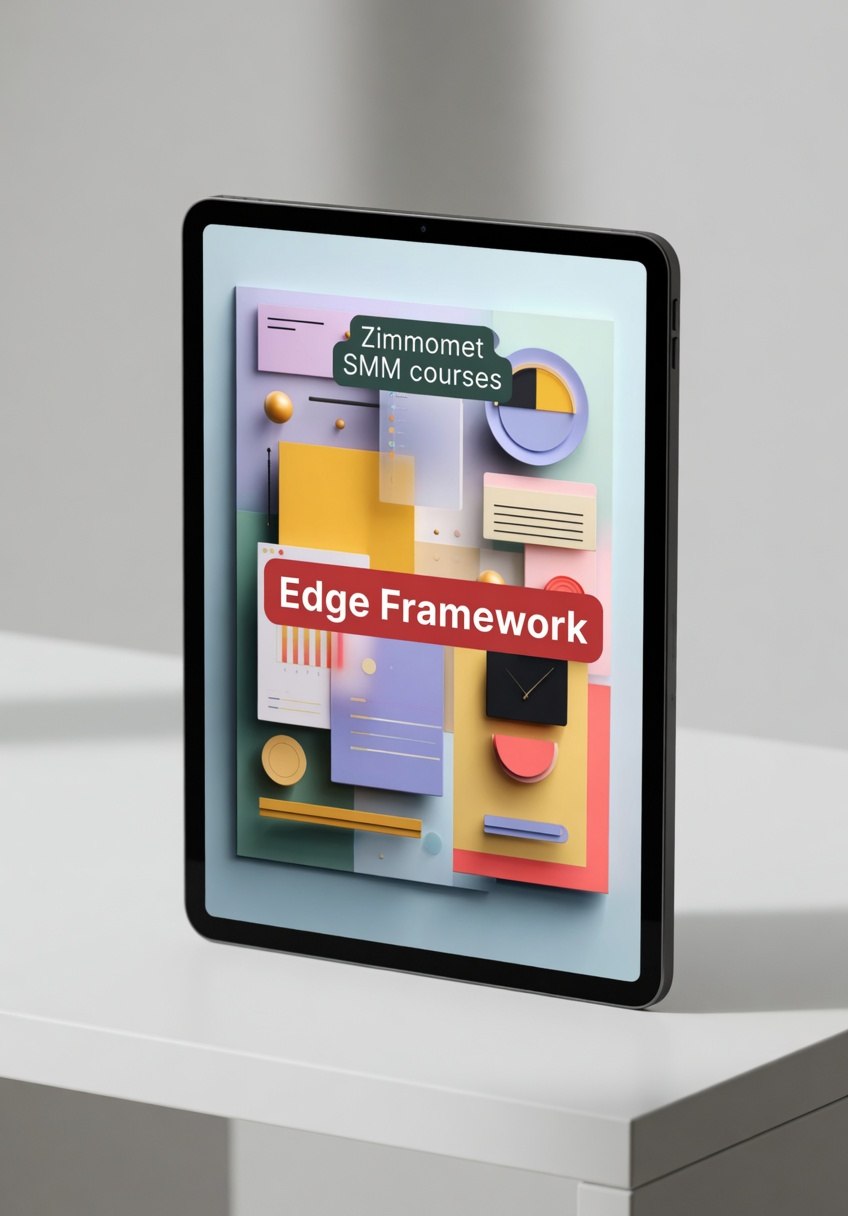
Zimmomet
Edge Framework
Edge Framework
Couldn't load pickup availability
Self-paced learning overview
- 📁 Digital file available after purchase
- 🗂️ Long-term availability
- 🔐 Secure checkout
- 📝 Content updated in 2026
1. Problem Statement
Struggling to connect strategy, content, tone, audience, and planning into one clear system? You’re not alone: at a certain stage, separate knowledge is no longer enough because you need to see the whole picture together. You may have topics, sections, style, and a plan, but without shared logic, they can work like separate parts rather than aligned communication. It can also be difficult to understand which materials support the main idea, which need refinement, and which should be reviewed. Edge Framework was created for those who want to study SMM more broadly: through a system of decisions, connections, and meaning priorities.
2. Solution
This course will teach you how to combine key SMM elements into one thoughtful communication framework. You will study how to connect brand foundation, audience situations, topics, messages, presentation modes, planning, and review. This tier helps you think not only through separate materials but through a full system: what the brand says, who it speaks to, in which format, with which task, and how it can be reviewed after publication. You will see how to create your own SMM map where every block has a purpose and connects with the other parts. Edge Framework is suitable for those who want deeper, more organized learning without exaggerated claims.
3. What’s Inside
- Module 1: Full SMM Map — gather all key communication elements into one system: foundation, audience, topics, style, plan, and review.
- Module 2: Brand Meaning Foundation — define main ideas, repeated messages, and communication boundaries for longer-term content work.
- Module 3: Audience Scenarios — describe different situations in which people perceive materials and choose suitable messages for them.
- Module 4: Topic Architecture — create a system of topics and sections where each part has its own function and supports the overall direction.
- Module 5: Presentation Modes — choose between introductory, explanatory, dialogue-based, analytical, and learning-focused formats depending on the task.
- Module 6: Style and Tone in the System — keep a consistent brand voice even when materials have different tasks, formats, and depth.
- Module 7: Planning Without Overload — create a content plan where topics, messages, and formats are placed with logic rather than randomly.
- Module 8: Review After Publication — analyze created materials: what was clear, what could be refined, and which topics can be developed further.
- Module 9: Practical Edge System — a final task for creating your own SMM map: idea, audience, topics, message, mode, style, plan, and review criteria.
4. Who is this for?
✅ A good fit if you...
- already know basic SMM concepts and want deeper structure;
- work with a brand, learning project, or your own digital communication;
- want to see connections between strategy, topics, style, and planning;
- have many materials and want to organize them into a system;
- enjoy working with maps, tables, examples, analysis, and practical exercises;
- want to study attentively, consistently, and without pressure.
❌ Not a fit if you...
- want a short introductory material;
- do not want to complete independent tasks;
- expect personal guidance instead of working with learning materials;
- want universal ready-made texts without adaptation;
- expect financial, career-related, or guaranteed claims.
5. What You’ll Learn
- how to create a full SMM communication map;
- how to connect brand foundation, audience, topics, and messages;
- how to define the role of each section and each material;
- how to adapt one topic for different presentation modes;
- how to keep a consistent style without sameness;
- how to plan materials with task, format, and context in mind;
- how to review finished content without naming specific platforms;
- how to find weaker places in the communication structure;
- how to prepare your own working system for further learning and practice.
6. Review Terms
Edge Framework is intended for self-paced study and deeper work with SMM as a complete system. Before choosing this tier, we recommend carefully reviewing the module topics, task format, level of detail, and expected amount of independent practice. The materials do not include claims about specific outcomes and do not replace individual consultation. This tier is created for developing structural thinking, planning, review skills, message work, and more thoughtful digital communication.
Who are Zimmomet courses for?
Who are Zimmomet courses for?
The courses are created for people who want to study SMM, content, digital communication, and audience work in a structured format. The materials are suitable for beginners, small brand owners, content creators, and learners who want to better understand online communication.
What is included in the learning materials?
What is included in the learning materials?
Depending on the tier, you receive lessons, modules, examples, working tasks, checklists, thinking templates, and materials for independent practice. Each tier has its own depth and topic range.
Share